Continuous Product Fit: The New Reality of Product–Market Fit
Product–Market Fit, as we used to understand it, is no longer a milestone. It’s a moving target. For years, we treated Product–Market Fit like a destination. All you needed to do was to validate a problem, build a solution, find traction, hit your growth curve, and that was it. All that was left was growth and scale.
The phrase became a buzzword in the tech industry. Every founder pitch, board meeting, interviews, meetups & conferences, etc had it echoed "Have you reached PMF?" it became synonymous with "do you have real users and traction?"
It all made sense in those times and frankly it was a real thing. When channels were stable, users were understanding, and markets were predictable, PMF was something you could make definite. The goal was to achieve it. The hard part was getting there.
Today, AI hasn't just changed what products can do. It's changed how fast the ground beneath them moves. The customer who loved your workflow on Monday can find a better one on Wednesday, built over a weekend by someone who wrapped a foundation model in a clean interface.
I've started calling it continuous product fit, because that's what it actually feels like to operate a product in 2026. You don't find it once. You keep earning it and keep going.
The old framework assumed a relatively stable world
The old framework involved Research → Validate → Design → Build → Launch and a continuous iterative process.
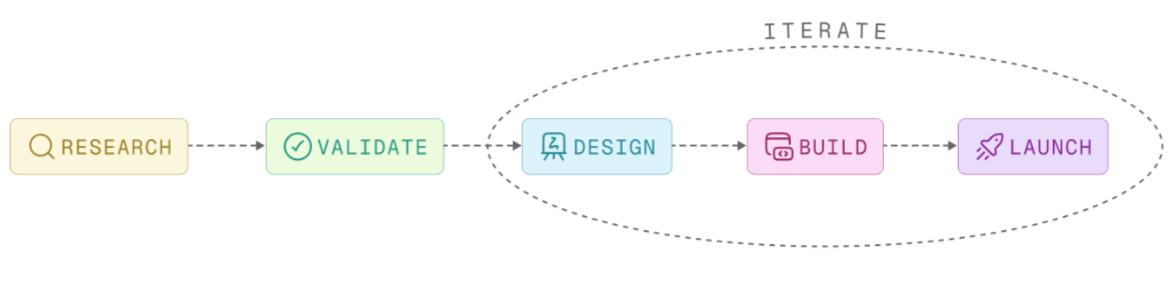
Image showing the framework for product-market fit
As such, the job was clear & definite: build something people want, validate it with usage and retention, then put your energy into growth. Fit was the input. Scale was the output. Usually, the only continuous process involves innovations around the actual product.
Now, AI hasn’t just introduced new tools; it has fundamentally changed user expectations. Users now expect: faster outcomes, not just better interfaces, personalization by default, automation where there used to be friction, Intelligence embedded into every interaction. This ultimately has redefined the framework to a continuous one.
What nobody accounted for was a world where the input (Fit) itself keeps changing underneath you. Where the reference points your customers use to judge your product, speed, intelligence, cost, personalisation, reset every few months because the underlying models got better, cheaper, or both. Where a non-technical individual with an API key and an AI tool can ship something that materially threatens a category leader. That's not a harder version of the old game. It's a different game.
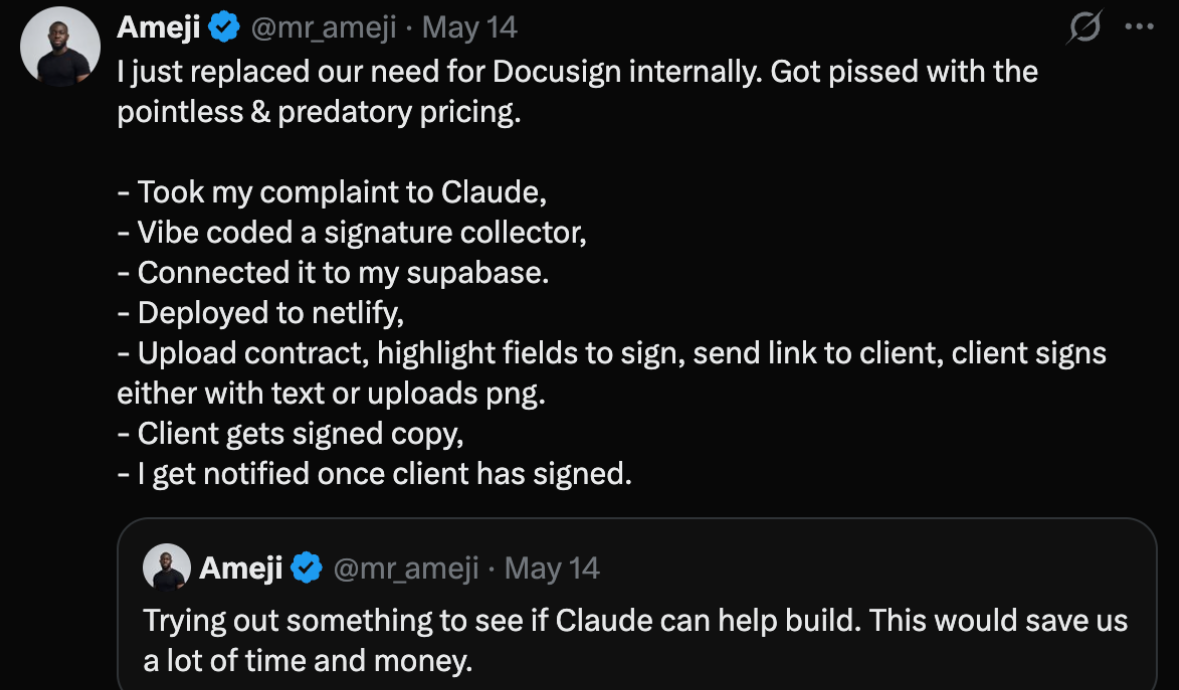
The AI effect
It's tempting to describe AI's impact on products as "it makes things faster" or "it lowers costs." Both are true, but that’s not all. The cost of building not just in engineering hours, but in research and validation used to be expensive enough that teams had to pick their bets carefully with lots of human effort. Now a single designer/engineer with the right tools can prototype three versions of a feature over lunch. When the cost of trying collapses, the advantage shifts from teams with the biggest roadmaps to teams with the sharpest instincts about what's worth trying.
Furthermore, intelligence in products has become the new normal. At the baseline, users now assume the software they use should understand context, anticipate intent, and do more with less input. A product that was delightful eighteen months ago can feel rigid and mechanical today, not because it got worse but because the fit moved. This is the part founders underestimate most. Your product just had to stay the same to become less impressive.
For decades, the user interface was a big part of the product. The look and feel, hierarchy in design, micros interactions and user experience, that was the thing a competitor had to rebuild from scratch. Now, much of it can be recreated by describing it to a model. This doesn't mean design is dead, far from it. Again, design has to work harder to matter, and the parts that do matter are shifting.
Continuous product fit, defined
Continuous Product Fit is the discipline of staying aligned with evolving user needs, behaviors, and expectations at the same pace those things are changing.
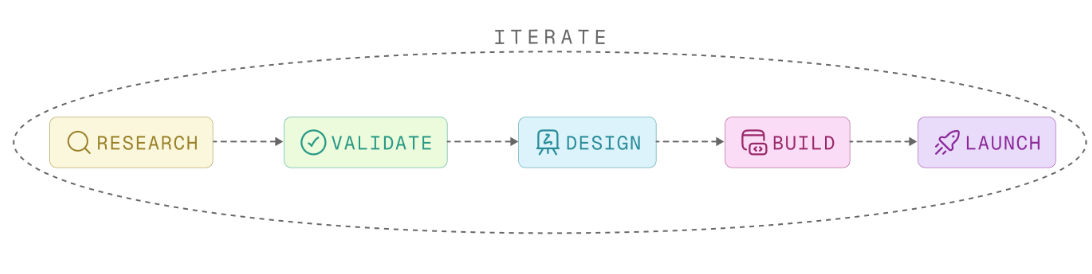
Image showing the framework for continuous product fit
In contrast to the old framework the iterative process covers every step of the process. It’s not iteration for the sake of iteration. It’s intentional, structured adaptability.
From experience, it boils down to three core shifts:
1. From Validation to Sensing
We used to validate ideas before building. Now, we need systems that constantly sense change. User interviews aren’t enough. Analytics dashboards aren’t enough. You need a feedback loop that combines: behavioral data, AI-driven insights & direct user signals, etc. And it’s needed in near real-time.
2. From Roadmaps to Response Systems
The old rigid quarterly roadmaps will struggle in an AI-driven environment. What works better is a response system that contains: clear product principles, fast decision-making loops and flexible prioritization. Still in a directed manner
3. From Features to Experiences
AI has commoditized features. They’re still useful and integral as ever but these aren’t longer enough. What users value now is: speed, personalization & intelligence and Intuition.
As a product leader, this changes the job. It’s less about crafting static interfaces and more about shaping adaptive experiences that evolve with the user.
The Human input
As the systems around us get more intelligent, the human touch becomes the thing that gives a product and its experience its meaning, not the thing that gets automated away.